Do I Need New Radiators for an Air Source Heat Pump?
Not necessarily. Some existing radiators may be perfectly suitable, while others may need to be larger. The correct answer comes from a room-by-room heat-loss calculation—not from replacing every radiator automatically.
Last updated: 22 August 2026.

The quick answer
A heat pump can work with radiators, underfloor heating or a mixture of both. Because a heat pump is normally designed to circulate water at a lower temperature than a traditional boiler, each radiator must have enough surface area to deliver the heat its room needs.
That does not mean every radiator must be changed. In many Pembrokeshire homes we find a mixture: some existing radiators are already large enough, some need upgrading and occasionally an additional emitter is helpful.
The important point: radiator decisions should be based on measured heat loss and the proposed system temperature, not on guesswork.
Why radiator size matters
A radiator gives out more heat when the water flowing through it is hotter. Boilers are often run at relatively high temperatures, while a well-designed heat pump aims to provide steady heating at a lower flow temperature. At that lower temperature, the same radiator produces less heat.
Room heat loss
We calculate how quickly each room loses heat through its walls, windows, floor, roof and ventilation.
Emitter output
We check what each existing radiator can deliver at the proposed heat-pump flow temperature.
Comfort and efficiency
The radiator schedule is designed to keep rooms comfortable without forcing the heat pump to work unnecessarily hard.
MCS guidance uses room-by-room heat-loss calculations to help size the heat pump and heat emitters accurately. This considers building fabric, room dimensions, ventilation, desired indoor temperatures and local winter design conditions.
What happens to my existing radiators?
Keep them
If an existing radiator provides enough output at the selected design temperature, there may be no reason to replace it.
Make them larger
A larger or higher-output radiator can deliver the required room heat while allowing the system to operate at a lower temperature.
Change the layout
Where wall space is limited, the design may use a different radiator type, an extra emitter or another practical solution.
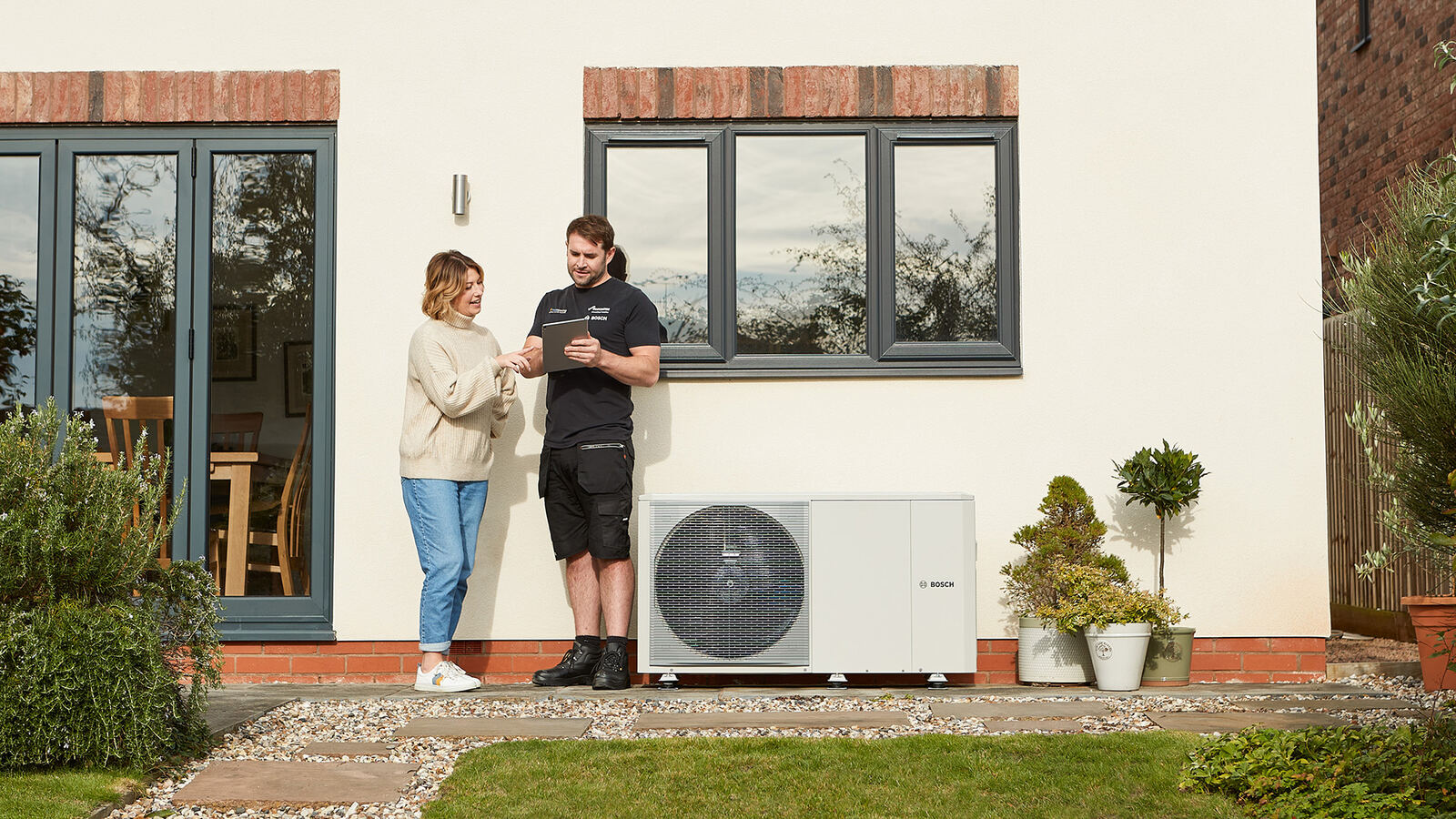
We explain any recommended radiator changes in the quotation. You should be able to see which radiators can remain, which ones need attention and why.
How we check the radiators during a survey
- Measure each heated room: including walls, windows, doors, floors and ceilings.
- Record the construction: such as solid or cavity walls, insulation, glazing and ventilation openings.
- Calculate room heat loss: using suitable indoor and local outdoor design temperatures.
- Record existing emitters: including radiator type, height, length and panel arrangement.
- Compare output with demand: at the proposed heat-pump flow temperature.
- Prepare a radiator schedule: showing what can stay and what changes are recommended.
This also prevents unnecessary work. If an existing radiator is suitable, we do not recommend changing it simply because a heat pump is being installed.
What about underfloor heating?
Underfloor heating can work very well with a heat pump because it uses a large surface area to provide heat. However, it still needs to be designed and controlled correctly. Pipe spacing, floor construction, floor coverings, water temperature and room heat loss all affect the result.
A home can also use a combination of underfloor heating downstairs and radiators upstairs. The design must ensure both parts of the system work together properly.
Do not compare radiator temperature with boiler heating
Heat-pump radiators may feel cooler to the touch, but the system is designed to provide steady heat for longer periods and maintain a comfortable room temperature.
Radiator questions
Will every radiator need replacing?
No. The decision is made room by room. Some may be suitable, some may need upgrading and others may already be larger than the room requires.
Can I keep designer or column radiators?
Possibly. We need reliable output information for the radiator at the intended water temperature and must compare it with the calculated heat loss for that room.
Will larger radiators look out of place?
Not necessarily. Modern double-panel radiators can provide more output without a dramatic increase in wall length. We consider practical positioning and appearance as part of the design.
Can radiators be upgraded after the heat pump is installed?
They can, but it is better to identify the required output during the design. This gives you an accurate quotation and helps the completed system perform as intended from the start.
Are radiator upgrades included in the grant?
The Boiler Upgrade Scheme provides a fixed contribution towards an eligible installation. Your quotation should clearly show the whole project cost, recommended radiator work and the grant contribution.
Why choose Del Brace Plumbing & Heating?
We design the heating system around the property rather than selecting a heat pump from the boiler size or floor area alone.
- MCS-registered heat pump installer
- Room-by-room heat-loss calculations
- Clear radiator and system recommendations
- TrustMark approved and RECC member
- BUS application support for eligible projects
- Local service across Pembrokeshire
Read more about the technical approach through the MCS Heat Load Calculator guidance or the Energy Saving Trust heat-pump guide.